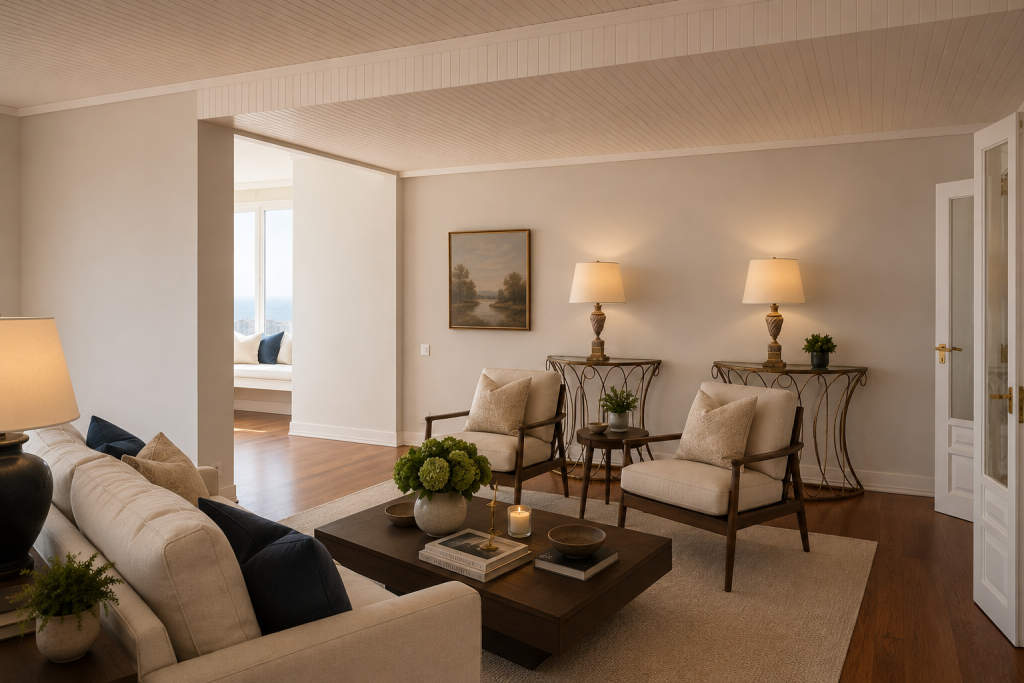
So. You are about to start an international property search.
You have probably saved a handful of listings, sent links to your partner and bored at least one friend with floor plans. Welcome.
At Wiley & Partners, I meet buyers at exactly this stage all the time. And the first thing I say is not “send me your budget”. It is “tell me about your life”.
Because buying a home in another country is a very different thing from buying one at home. The rules change. The paperwork changes. Even the way properties are sold can change. A little preparation turns all of that from stressful into rather exciting.
This guide walks you through how I would prepare, step by step. We will define what you need, research the right areas, get your team in place, organise your viewings and judge each house properly when you finally walk through the door.
Why Property Buying Abroad Needs a Different Approach
At home, you know the neighbourhoods. You know which streets are lovely and which ones to avoid. If you are unsure about a house, you can drive past on a Sunday afternoon and take another look.
As an international buyer, you usually have none of that. You may fly in for four days. You may see a house once. You may be relying on photographs taken by someone else, often with a very wide lens.
Property photography is a wonderful thing. It can also perform minor miracles. A room becomes enormous. A terrace suddenly has an uninterrupted ocean view. And “walking distance to the centre” occasionally requires hiking boots and provisions.
That is why property buying abroad rewards the people who prepare. Not because it is complicated, but because you have fewer chances to correct a mistake.
Think of it like packing for a long trip. You do not want to realise at the airport that the important things are still on your kitchen table.
Step 1: Start With Your Life, Not the Listings
This is the step everyone wants to skip. It is also the one that matters most.
Before you open a single listing, I want you to think about how you actually want to live.
Think About a Tuesday, Not a Holiday Saturday
Saturday afternoon abroad is easy to love. The sun is out, lunch is by the water and everything feels like the best idea you have ever had.
I am more interested in Tuesday at 8:10 in the morning.
Where are the children going to school? How long is that drive in real traffic? Do you work from home or commute? Do you want to walk for coffee, or would you rather have a garden where nobody sees you in your pyjamas? Do you have dogs? How often will you need to get to an airport?
This is the life we are choosing a house for. A spectacular villa that adds forty minutes to every school run is not a spectacular villa for you.
Write Three Simple Lists
I like three lists:
- Must have: the things you truly cannot do without, such as three bedrooms, a home office or secure parking.
- Would love: the lovely extras, such as a pool, a sea view or a big terrace.
- Absolutely not: the dealbreakers, such as a steep hill, a noisy road or a house that needs major structural work.
Then we get ruthless.
Wish lists have a habit of becoming ambitious. Suddenly you need five bedrooms, a sea view, a flat garden, a pool, a guest house, an office and the ability to walk to the market in seven minutes. For a budget that would struggle to buy half of that.
I admire optimism. But a good overseas property search is about deciding what really matters.
Decide Why You Are Buying
Is this a forever home, a holiday home, an investment or a bit of everything?
A family moving permanently needs schools, healthcare and everyday shops close by. A holiday buyer may care more about views and easy travel. An investor will think about rental demand and resale. Knowing your purpose early makes every later decision easier.
Build a Realistic Budget
Your budget is more than the asking price.
When you buy abroad, you also need to think about legal fees, taxes, registration costs, possible renovation, furniture, insurance and the everyday cost of running the house. If you are moving money between currencies, exchange rates can quietly change what your budget really means, so speak to your bank or a currency specialist early.
My advice is simple. Decide your comfortable maximum, then keep a small cushion for the unexpected. Older houses in particular have a talent for surprising people.
Step 2: Research the Area Before You Fall in Love With a House
Here is something I explain to almost every new client.
You are not only buying a house. You are buying the street, the neighbours, the traffic, the morning light and the route you will take hundreds of times a year.
One Country Is Never One Lifestyle
Even within a small stretch of coastline, the feeling can change completely from one town to the next.
One area may let you leave the car at home for days, with cafés, the market, the train and the beach all within walking distance. Another may give you gardens, pools and privacy, but you will use the car for almost everything. Go a little further and you may find somewhere wilder, cooler and quieter again.
None of these is better than the others. The real question is which one feels like you.
So pick two or three areas that match your lists from Step 1, then look at each one properly.
Check the Boring Things That Change Your Life
Photos show you a kitchen. They do not show you daily reality. When you research an area, check:
- How far it is from schools, doctors, supermarkets and public transport
- How long the journey to the airport or the nearest big city really takes
- What the traffic does at rush hour and in the busy summer months
- Whether the area is lively in winter or feels empty
- Whether there are plots nearby where somebody could build and block your view
Use online maps, but do not trust them completely. Google Maps does not have thighs. A ten minute walk on screen can become a steep climb with shopping bags.
Consider Renting First
I am a real estate agent telling you that sometimes you should not buy a house immediately.
There. I said it.
If you do not yet know which area suits you, renting for a few months can be incredibly useful. Do the school run. Go to the supermarket on a rainy Tuesday. Spend a winter there. Find out which cafés become yours.
You may confirm exactly what you thought. Or you may discover that the area you barely considered is the one you never want to leave. Both are valuable answers.
Step 3: Get Your Team and Paperwork Ready
This part is not glamorous. But it protects you, and it helps you move quickly when the right house appears.
Understand How the Local Market Works
Every country has its own way of selling property, and it may not work like the market you know.
In Portugal, for example, there is no single comprehensive listing system showing everything for sale. Properties may be represented by different agencies, appear more than once online, be marketed quietly off the market or reach an agent through another agent before you ever see them advertised.
This is why representation matters. A buyer’s agent in Portugal works for you, not for a particular stock of properties. If another agency has the right house for you, wonderful. I want to see it. My job is not to sell you my inventory. My job is to find your house.
Choose Your People Early
A strong team usually includes a buyer’s agent, an independent lawyer and, where needed, an accountant or tax adviser.
The lawyer is especially important. Documentation, ownership, licences, registered areas and due diligence all need to be understood before you get carried away with where the sofa will go.
Love the house. But let the lawyer perform the due diligence.
Sort Out the Basics
Foreign buyers often need a local tax number and a local bank account before a purchase can go ahead. If you plan to use a mortgage, talk to lenders early, because rules for non-resident buyers can be different and approval takes time.
None of this is exciting. All of it is useful. Ask a trusted professional exactly what you need rather than guessing.
Step 4: Organise Your Property Viewing Trip
Now we get to the fun part.
A well-organised property viewing trip feels like an adventure. A badly organised one feels like a very expensive tour of disappointing houses.
Shortlist Before You Fly
Do not arrive with a vague idea and hope for the best. Browse the properties currently for sale, compare them with your three lists and keep only the ones that genuinely fit.
Before each viewing, ask for the basics: the floor plan, size, year built, condition, running costs and legal status. If a house fails your must have list, skip it. I would much rather you see four excellent homes than ten average ones.
Use Video Calls Wisely
Virtual viewings are useful when you are searching from far away. They can remove unsuitable homes before you travel and save you a lot of time.
But remember that a video is still a filtered view of the house. It should shorten your list. It should not replace the real visit.
Plan the Days Sensibly
Trying to see ten homes in one afternoon is exhausting, and by the fifth they all start to look the same.
Group your viewings by area so you are not crossing the region several times a day. Leave breathing space between appointments. Three to five homes a day is plenty for most people. And if you can, stay a few days after the viewings so you can revisit your favourites.
Go Back at a Different Time
A quiet street at 11am on a Tuesday can look very different at 6pm on a Friday.
Return to your favourite houses at another time of day. Listen to the noise. Watch where the sun falls. Check the parking. Look at how the neighbours care for their homes.
Take Notes Straight Away
By the end of the trip, your memory will play tricks on you. Take photos and short videos (with permission) and write down your first impressions straight after each visit.
A simple scorecard with location, light, layout, condition and price helps you compare homes fairly. It also stops the one with the beautiful kitchen from winning by default.
Step 5: Evaluate Each Property Properly
A house can be charming and still be the wrong house.
During a viewing, my job is to look past the styling and understand what you would actually be living with.
Look Past the Decoration
Fresh paint, lovely furniture and soft lighting can hide a lot. Try to imagine the empty room with your own furniture and your own routine. Does the layout work? Are the bedrooms really usable? Is there somewhere sensible to put the coats, the shoes and the vacuum cleaner?
Check the Condition
Look carefully at the things that are expensive to fix:
- Damp, mould or water stains on walls and ceilings
- The age and state of the roof
- Windows, doors and insulation
- Electrics and plumbing
- Cracks that look bigger than normal settlement
If anything worries you, ask for a professional survey. It costs far less than discovering a problem after you own the house.
Watch the Light
Light changes how a home feels more than almost anything else. Notice which rooms get morning sun, which glow in the evening and which stay dark. A bright, well-oriented home is usually more pleasant to live in and often cheaper to run.
Think About Resale
Even if you tell me this is your forever home, life has an annoying habit of changing its plans.
I want to know that if you need to sell one day, somebody else will want to buy. A good location, a sensible layout and clear legal status make that much easier. If an ocean view is part of the appeal, check whether it is protected or whether a plot in front could be built on.
Be Honest About Renovation
Older houses can have extraordinary character. Timber floors, stone, arches, shutters and proportions you rarely find in new builds.
Sometimes those houses need work, and that does not frighten me. What worries me is buying a renovation project without understanding what the renovation involves. Get realistic costs, allow extra time and decide what should change and what absolutely should stay.
Conclusion: Prepare Well, Search Calmly, Buy Happily
A successful international property search does not begin with a listing. It begins with a clear picture of the life you want.
Define what you need. Research the areas. Get your team and paperwork ready. Organise your viewings carefully. Then judge every house with a calm eye, and ask the awkward questions before you commit.
A beautiful house can make us wonderfully irrational. My job is occasionally to stand beside you and say, “Yes, it is gorgeous. Now let’s talk about the roof.”
I want you excited on completion day. I also want you happy six months later.
Ready to start your search the right way? Contact Wiley & Partners and tell us about the life you want. We will start with a conversation, and the houses can wait ten minutes.
Frequently Asked Questions About International Property Search
- How do I start an international property search?
Start with your life, not the listings. Write down your daily routine, budget, must have features and dealbreakers. Then research two or three areas, speak to local professionals and only then begin looking at specific homes.
2. How many properties should I view on one trip?
Three to five homes a day is plenty for most buyers. After that, houses start to blend together. It is better to see fewer properties carefully than many in a rush.
3. Can I buy a property abroad without visiting it?
It is possible, but it carries more risk. Videos and virtual viewings are great for building a shortlist, but they cannot show you noise, light, smells or the feel of the street. Whenever you can, visit in person or send a trusted representative.
4. What extra costs should international buyers expect?
Besides the purchase price, plan for legal fees, taxes, registration costs, possible renovation, furniture, insurance and yearly running costs. Ask your lawyer or agent for a full estimate before you make an offer.
5. Do I need a lawyer when buying property in another country?
Yes, I strongly recommend one. An independent lawyer checks ownership, licences, registered areas and contracts, and explains the process in plain language before you commit.
6. Is it better to rent before buying abroad?
If you do not know the area well, renting for several months can teach you more than dozens of viewings. You can test the commute, the school run and the seasons before making a long term decision.
7. How do I compare properties fairly after several viewings?
Use a simple scorecard. Mark each home for location, layout, light, condition, price and potential. Add your notes and photos from the day, and the right choice usually becomes much clearer.