Not literally.
You can stay.
But for the next hour, I need you to stop looking at this house as yours.
I know.
That’s difficult.
You chose the blue in the dining room.
That photograph on the console is your daughter in Comporta when she was six.
The slightly battered chair beside the fireplace belonged to your grandmother and absolutely nobody is allowed to suggest that it doesn’t belong there.
Understood.
But today, we’re selling a house.
And the person we’re selling it to hasn’t met your grandmother.
Yet.
Come Outside With Me.
This is where I like to begin.
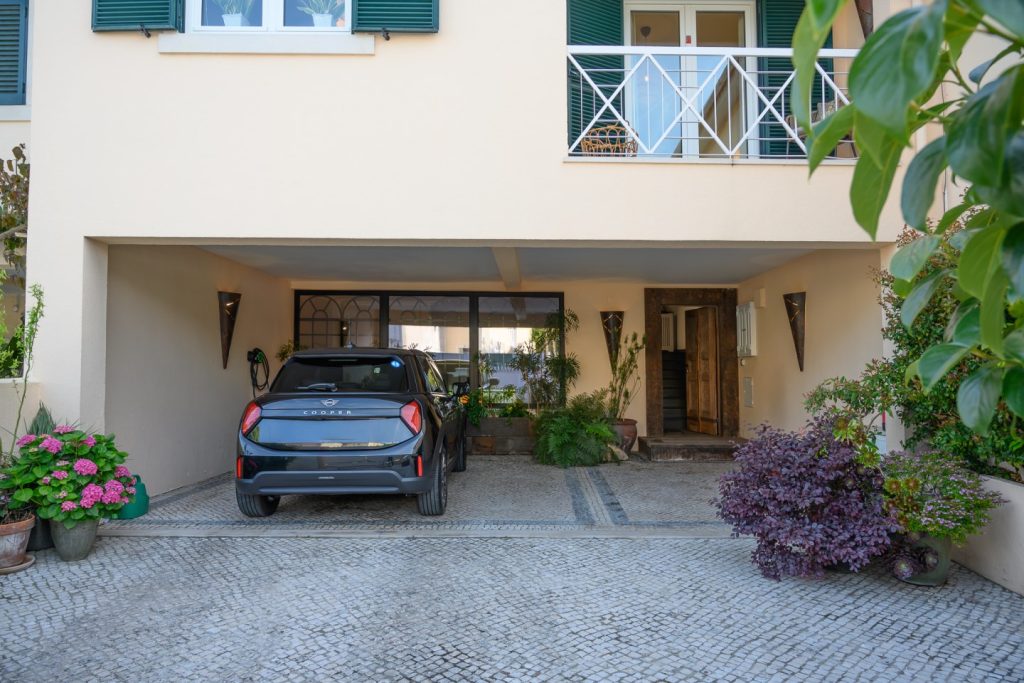
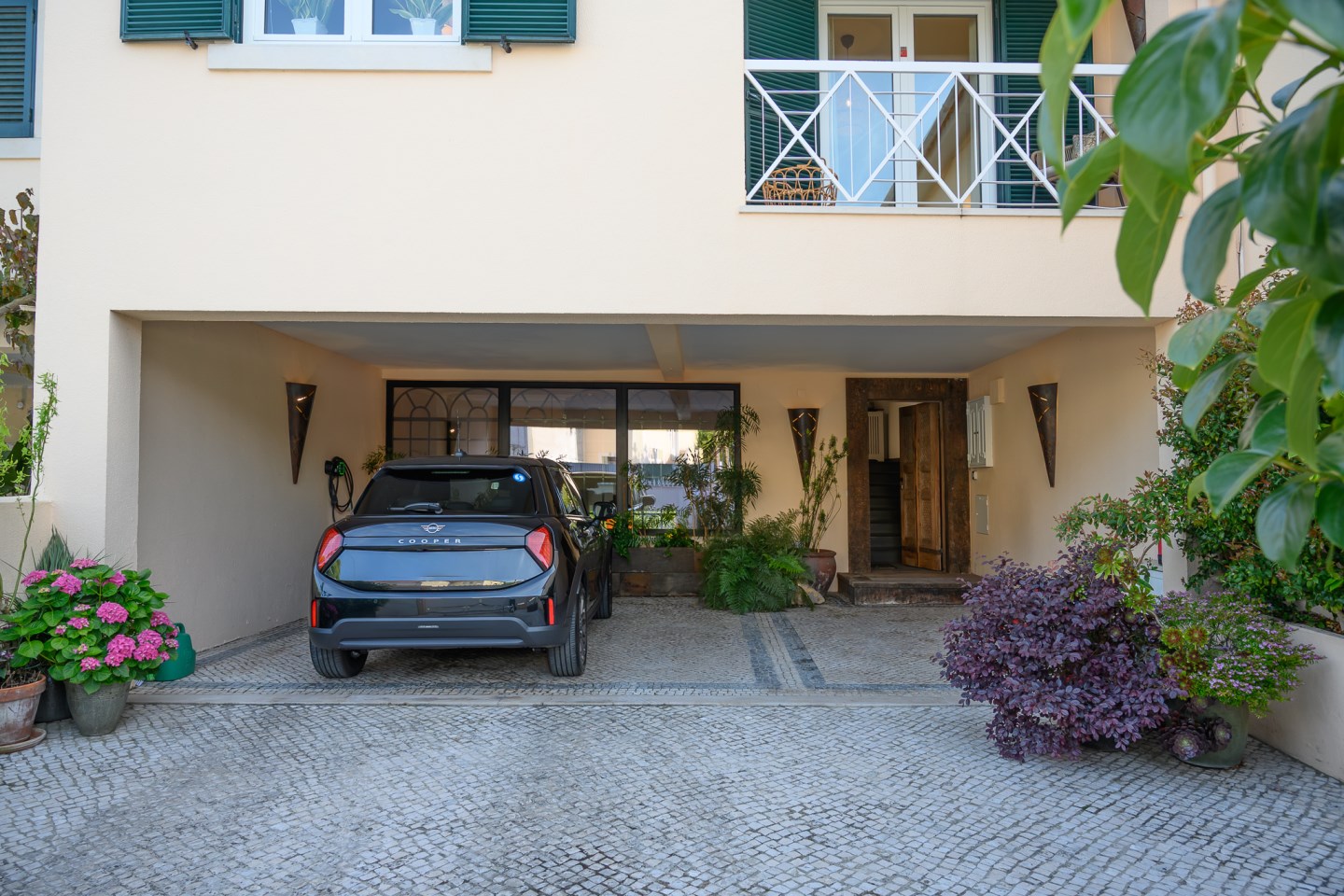
Across the street.
Turn around.
Look at your house.
What do you see?
Not what do you know is there.
What do you actually see?
Because this is approximately where your buyer’s relationship with your property begins.
Perhaps they first saw it at 11:00 at night on their telephone in London.
Or Stockholm.
Or New York.
Or Paris.
They stopped scrolling.
Something caught them.
The architecture.
The garden.
The light.
A glimpse of the ocean.
And now they’re standing where we’re standing.
They haven’t fallen in love yet.
We have perhaps thirty seconds.
Let’s not waste them.
The hedge gets trimmed.
The dead plant disappears.
The hose gets put away.
The front door may need painting.
And that charming collection of seven recycling bins?
They are going into witness protection.
First impressions begin before the buyer ever crosses the threshold. That’s one of the most important parts of preparing a home for the property market.
Now Let’s Walk Inside.
And this is where I become slightly annoying.
I’m going to notice things you’ve stopped noticing.
The door that sticks.
The cracked bathroom tile.
The water mark you’ve been meaning to paint for three years.
The lightbulb that’s been out since Christmas.
You don’t see them anymore.
The buyer sees every single one.
Worse, one little problem can make a buyer start imagining ten invisible ones.
A €50 repair suddenly becomes:
“Darling, I wonder if there’s something wrong with the roof?”
There probably isn’t.
But now we’re talking about the roof.
So we fix the €50 problem.
Small visible defects can create disproportionately large doubts about how a property has been maintained.
That’s why I want to walk through the house before we put it on the market.
Not to turn it into something it isn’t.
To make sure the things that can be easily fixed aren’t distracting buyers from everything that makes the property special.
And Now I’m Going to Ask You to Pack.
Not everything.
Just enough.
The house still needs a soul.
I’m not interested in turning your home into one of those peculiar beige spaces where apparently nobody owns a book, cooks dinner or has ever acquired an object while traveling.
But there is a difference between character and your character.
We need just enough of you to make the house feel loved.
And just enough absence for someone else to imagine loving it.
That means some family photographs come down.
Collections get edited.
Cupboards lose half their contents.
Bathroom counters become mysteriously civilized.
And if you haven’t used it in two years, congratulations:
You’ve just started packing for your move.
The objective isn’t to erase the home.
It’s to give buyers enough visual space to imagine their own life inside it.
Then We Clean.
Not “the cleaner was here Tuesday” clean.
I mean:
Someone is going to open that kitchen cabinet.
Clean.
Windows.
Tracks.
Grout.
Skirting boards.
Light fixtures.
The forgotten corner behind the downstairs loo that apparently hasn’t been visited since António Guterres was prime minister.
Clean.
There is something almost subconscious about walking into an immaculate house.
You don’t necessarily think:
“This grout is exceptional.”
You think:
They cared for this house.
And that’s the message we’re selling.
A spotless property quietly communicates that the home itself has been cared for.
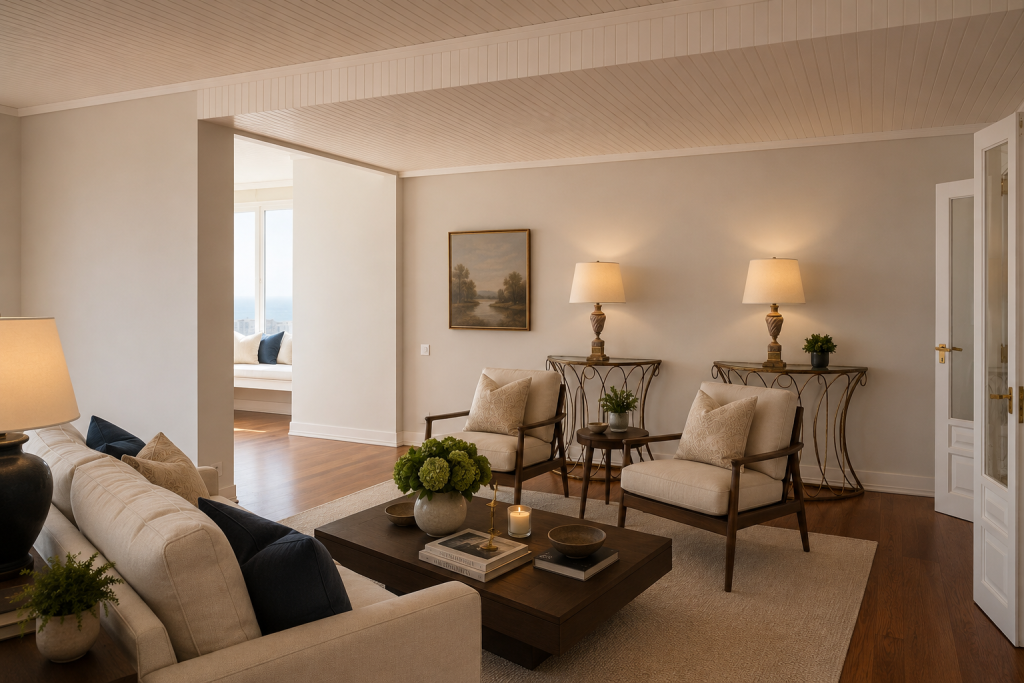
Now We Stage.
This is where people sometimes misunderstand me.
Staging isn’t decorating.
I’m not trying to create my house.
I’m trying to reveal yours.
Perhaps that enormous sofa is wonderful for Sunday afternoon football.
Unfortunately, it also makes your 45 m² living room look approximately the size of a TAP business-class lavatory.
So it goes.
We move the chairs.
We open the sightline to the garden.
We put something beautiful on the dining table.
Fresh flowers.
A book.
Perhaps a throw.
And suddenly you notice the fireplace again.
The room hasn’t changed.
The way you experience it has.
That’s staging.
Good presentation should reveal the property’s strongest features and give every room an obvious purpose. This is an important part of seller representation when preparing a property for the market.
And Then Nobody Touches Anything.
Because the photographer is coming.
And this matters enormously.
Your first showing probably won’t happen at your house.
It will happen on a screen.
Your buyer may be sitting in California at breakfast.
Or London during lunch.
Or scrolling Idealista in bed while their spouse is asleep beside them.
You have approximately one thumb-swipe to stop them.
That is why I don’t compromise on photography.
The light needs to be right.
The curtains need to be right.
The pool needs to be right.
The terrace needs to make someone in rainy London seriously question their life choices.
Professional photography isn’t an administrative step after we’ve prepared the house.
It’s the moment all that preparation becomes visible to the world.
But Beautiful Photographs Don’t Sell Houses.
They get people through the door.
Then my real work begins.
Who is our buyer?
Portuguese?
American?
Swedish?
French?
British?
Are we selling a primary residence?
A pied-à-terre?
A family house?
An architectural property?
A lifestyle?
Privacy?
Proximity to international schools?
Five minutes to the beach?
Twenty minutes to Lisbon?
The marketing strategy for a €700,000 apartment in Cascais should not be the same as the marketing strategy for a €7 million estate in Estoril.
And putting something on Idealista is not a marketing strategy.
It’s putting something on Idealista.
A property needs a story.
It needs positioning.
It needs the right photographs, the right language and the right audience.
Sometimes that means portals.
Sometimes international publications.
Sometimes social media.
Sometimes another agent already has the buyer.
And sometimes the person who eventually buys your home isn’t even actively looking for it yet.
My job is to find the route between your property and that person.
You can also explore properties currently for sale to see how homes are being presented and positioned in the market.
Meanwhile, There’s a Less Glamorous Drawer in My Office.
Paperwork.
I know.
Nobody has ever whispered:
“Wiley, tell me more about the Caderneta Predial.”
But documentation can derail a transaction just as quickly as price.
So while we’re making the house beautiful, we’re also quietly getting everything else ready.
Property documents.
Energy certificate.
Plans.
Licences where applicable.
Condominium information.
Renovation records.
Invoices.
Anything your lawyer or the buyer’s lawyer is likely to ask for.
Because the worst time to discover we’re missing something is three weeks after someone has fallen in love with the house.
Preparation isn’t only visual.
Organized documentation helps maintain momentum and creates confidence once a buyer becomes serious.
Then Comes the Showing.
You may want to stay.
Please don’t.
I mean that affectionately.
Go have lunch.
Walk the dog.
Visit your mother.
I’ll call you.
Buyers behave differently when the owner isn’t there.
They sit on the terrace.
They whisper to one another.
They open cupboards.
They stand silently in the principal bedroom and imagine waking up there.
They need permission to mentally make the house theirs.
It’s very difficult to imagine your future while the current owner is standing three metres away explaining where they bought the curtains.
Let me show the house.
Let me watch them.
The questions they ask tell me things.
The rooms they return to tell me things.
The objection they mention casually on the way out may eventually become the entire negotiation.
That’s my job.
And Then Someone Falls in Love.
This is the bit we’ve been waiting for.
An offer arrives.
Perhaps it’s wonderful.
Perhaps it’s offensive.
Perhaps it’s wonderful but you think it’s offensive.
This is where I need you to do something very difficult.
Don’t react.
Call me.
Because selling your home is emotional.
Negotiating its sale cannot be.
I need to understand the buyer.
Their financing.
Their timing.
Their alternatives.
Their motivation.
What matters to them besides price.
And then we respond.
Sometimes I will tell you to hold firm.
Sometimes I’ll tell you to counter.
Sometimes I may tell you that the offer you were about to reject is actually a very good one.
And occasionally I’ll tell you:
No.
We’re not selling your house to this buyer on these terms.
An experienced seller’s agent isn’t there merely to transmit offers between two WhatsApp accounts. Market knowledge and negotiation are central parts of effective seller representation.
This Is Why I Want to Be Involved Before the Photographer Arrives.
Not after the listing has been online for three months.
Not after six agencies have photographed it six different ways.
Not after the price has changed twice.
Not after everybody in Cascais knows it hasn’t sold.
Before.
Because the launch matters.
The first photographs matter.
The first price matters.
The first impression matters.
And the first few weeks tell the market a story about your property.
I’d rather decide what that story is.
So, You’re Thinking About Selling Your House.
Wonderful.
Don’t clean it first.
Don’t repaint it.
Don’t hire a photographer.
And please don’t throw away your grandmother’s chair.
If you want to understand more about Wiley’s story and approach to real estate, you can learn more before we begin.
Call me.
We’ll stand across the street together.
We’ll walk through every room.
I’ll tell you what I would change.
I’ll tell you what I wouldn’t touch.
We’ll decide what needs fixing, what needs hiding, what needs celebrating and what absolutely needs photographing at five o’clock when the light hits it just so.
Then we’ll get the documents ready.
We’ll build the story.
We’ll decide who we’re trying to reach.
And only when everything is ready—
we open the doors.
Because you don’t get a second chance to introduce your home to the market.
And I would very much like to make the first introduction count.
If you’re thinking about selling your home in Cascais, Estoril or the surrounding areas, contact Wiley & Partners before you make your first move.
Frequently Asked Questions
1. What should I do before putting my home on the market?
Before doing anything, take a step back and look at the property as a buyer would. Walk around the exterior, inspect each room, identify small repairs, declutter personal belongings and consider how the property will look in photographs.
2. Should I remove personal items before selling my home?
Not everything.
Your home should still have character, but buyers also need enough visual space to imagine their own lives there. Editing family photographs, collections and excess belongings can help create that balance.
3. Do small repairs really matter when selling a property?
They do.
A sticking door, cracked tile or visible water mark may seem insignificant to you because you’ve lived with it for years. To a buyer, however, one small defect can create questions about what else might need attention.
4. Why is professional photography important?
Because your first showing may happen on a screen rather than in person. Professional photography helps make the property’s strongest features visible to buyers searching online and can determine whether they decide to arrange a viewing.
5. Does staging mean redecorating my entire house?
No.
Staging isn’t about creating someone else’s house. It’s about revealing yours. Furniture may be rearranged, rooms may be simplified and certain features may be highlighted so buyers can understand the purpose and potential of each space.
6. Should I stay home during property viewings?
I recommend that you don’t.
Buyers often behave differently when the owner isn’t present. They can speak freely, ask questions, explore the rooms and imagine themselves living in the property without feeling like they’re intruding.
7. What documents should I prepare before selling?
The exact requirements can vary, but sellers should begin gathering relevant property documents, the energy certificate, plans, applicable licences, condominium information, renovation records and invoices or other documentation that may be requested during the transaction.
8. How should my property be marketed?
There isn’t one strategy that works for every property.
The right approach depends on the property, location, price point, likely buyer and the story the home has to tell. That can include property portals, international publications, social media, professional photography and relationships with other agents.
9. What should I do when I receive an offer?
Don’t react immediately.
Call your agent.
The right response depends on more than the number on the offer. Financing, timing, motivation, conditions and the buyer’s circumstances can all influence whether an offer is worth accepting, countering or rejecting.
10. When should I contact a seller’s agent?
Before you clean, repaint, photograph or list the property.
The earlier your agent is involved, the more opportunity there is to prepare the property properly, decide how it should be positioned and create the right strategy before it is introduced to the market.